LITTLE BITES · THE CALDIORS FOOD GUIDE

Indian baby food chart by age,
for every little stage.

From the first solid food at 6 months to family meals at 5. A baby food chart by age and stage, with an age calculator, 32 Indian food ideas you can filter for a vegetarian home, and a seven-day planner, made for real kitchens and wonderfully different little eaters.

Birth to 5 yearsIndian food ideasNo sign-up needed
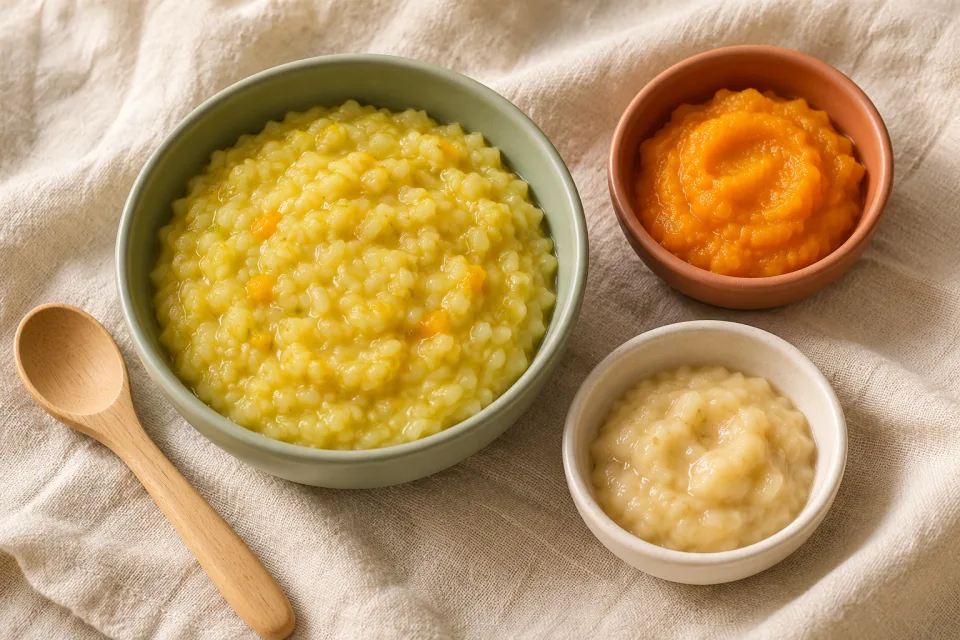
Bowls of soft dal-rice mash, pumpkin mash and mashed banana with a wooden baby spoonLittle bites.
Lovely beginnings.
Food inspiration · adapt textures and portions to your child
◷ Age-wise, from milk to meals
⌕ 32 thoughtful food ideas
→ Guidance with sources
♧ Vegetarian & family options
  1. 1Find their stageEnter the date of birth, or pick a month.
  2. 2Pick food ideasFilter 32 Indian ideas for your home and your child's age.
  3. 3Plan a weekSeven days of ideas for that stage, ready to print.
  4. 4Feed with careTextures, allergens, hygiene and the signs to watch.

Step 1 of 4 A LITTLE STARTING POINT

Find their feeding stage, by age.

Every baby follows their own rhythm. Use age as a starting point, alongside readiness and your paediatrician’s advice.

How old is your little one?

Calculate completed months and days, then explore their feeding stage.

Dates stay in this page’s memory. No account, storage or transmission of your entries.

6 months · First tastes

Small spoons. A whole new world.

At around 6 months, look for developmental readiness alongside age. Continue breast milk or first infant formula while introducing soft complementary foods.

THE TEXTURESoft, thick mash
THE RHYTHMBuild towards 2–3 small meals
THE STARTING POINTBegin with a few teaspoons
A gentle reminder

Offer soft food without added salt or sugar. Let your baby set the pace.

Read the guidance →
Browse a specific month or year

A baby food chart by month, in one place: tap your child’s age and the stage card below updates, so there is no separate page to find for every month.

Meal frequency is a general guide, especially for breastfed children; milk feeding and individual needs affect the daily pattern. This tool does not calculate calories, milk volumes, supplements or a nutritionally complete diet.

NextStep 2: pick food ideas for this stage

Step 2 of 4 FROM YOUR KITCHEN, WITH LOVE

First foods to family meals: 32 Indian ideas.

Familiar ingredients. Soft textures. A little variety. From 6 month baby food recipes to toddler plates, find an Indian idea that fits your family.

Ingredient exclusions & allergy information

These filters remove recipe ideas with the listed declared ingredients. They do not guarantee allergen-free food or account for brands, substitutions or cross-contact. Check labels, equipment and all ingredients. Do not cut out major food groups without professional advice. Mixed dishes are not a first-allergen introduction plan.

Food ideas

Adapted to your selected age.

meals

Moong dal & rice mash

A familiar Indian starting point.

Ingredients: moong dal, rice, water, sunflower oil.

Cook washed dal and rice in water until both collapse. Mash together into a thick, spoonable texture; stir in a little oil. Cool before serving.

Flags: Legumes

meals

Pumpkin & lentil bowl

Vegetable variety + pulses.

Ingredients: pumpkin, red lentils, water, sunflower oil.

Peel and deseed pumpkin. Cook it with washed red lentils until very soft. Mash thoroughly, then add a little oil.

Flags: Legumes

grains

Banana oat porridge

Naturally sweet, with no added sugar.

Ingredients: plain oats, ripe banana, water.

Cook plain oats in water until completely soft. Mash in ripe banana. Adjust with water to a soft, thick texture and cool. Oats may have wheat contamination; check labels.

Flags: Gluten

grains

Soft ragi porridge

One of several grains to rotate.

Ingredients: ragi flour, water.

Whisk ragi flour into water, then cook thoroughly while stirring until smooth and spoonable. Add water if needed; cool before serving.

Check all ingredient labels and cross-contact risks.

vegetables

Sweet potato mash

A simple vegetable taste.

Ingredients: sweet potato, water.

Peel sweet potato and steam until it squashes easily. Mash with a little water until soft; check there are no firm pieces.

Check all ingredient labels and cross-contact risks.

fruit

Steamed pear mash

Soften firm fruit first.

Ingredients: pear, water.

Peel and core a pear. Steam until very soft, then mash. For older children, offer a texture they can safely manage.

Check all ingredient labels and cross-contact risks.

fruit

Ripe papaya mash

A seasonal fruit option.

Ingredients: ripe papaya.

Wash and peel ripe papaya. Remove all seeds and mash the soft flesh. Use only fully ripe, soft fruit.

Check all ingredient labels and cross-contact risks.

dairy

Plain curd & banana

Dairy as food, not a milk replacement.

Ingredients: pasteurised full-fat plain curd, ripe banana.

Use fresh plain curd made from pasteurised milk. Mix with finely mashed banana. Avoid sweetened curd and honey.

Flags: Milk

protein

Well-cooked egg mash

Protein with an explicit egg flag.

Ingredients: egg, water.

Cook an egg until both white and yolk are firm. Mash with water to a moist texture. Introduce egg separately in a small amount before using it in mixed dishes.

Flags: Egg

protein

Soft tofu & carrot

A plant protein option.

Ingredients: plain tofu, carrot, water.

Peel and steam carrot until very soft. Heat tofu thoroughly, then mash both together with water. Check tofu ingredients.

Flags: Soy

grains

Iron-fortified cereal

An option to discuss for dietary iron.

Ingredients: plain iron-fortified infant cereal (ingredients vary by brand), water.

Choose a plain, age-appropriate fortified cereal without added sugar. Follow the packet instructions using water. Ingredients vary: this guide conservatively flags milk, wheat and soy. Check for all allergens; choose a product that fits your child’s dietary advice.

Flags: Milk, Gluten, Soy

fruit

Avocado mash

A soft fruit to explore.

Ingredients: ripe avocado.

Wash, halve and remove the stone and skin. Mash fully ripe avocado until soft, with no firm pieces.

Check all ingredient labels and cross-contact risks.

meals

Rice & mashed peas

Small round foods need changing.

Ingredients: rice, peas, water, sunflower oil.

Cook rice and peas until soft. Mash every pea so none remain round and whole, then mash into the rice with a little oil.

Flags: Legumes

grains

Apple oat bowl

Cooked apple, never hard chunks.

Ingredients: apple, plain oats, water.

Peel and core the apple. Cook with oats and water until the apple is fully soft, then mash. Check oats for wheat contamination.

Flags: Gluten

protein

Chickpea & pumpkin mash

Pulses in a soft, moist form.

Ingredients: fully cooked chickpeas, pumpkin, water, sunflower oil.

Use chickpeas already cooked until very soft. Steam pumpkin, then mash both thoroughly with water and a little oil. Never offer whole firm chickpeas.

Flags: Legumes

protein

Chicken & vegetable rice

Optional for families who eat meat.

Ingredients: boneless chicken, rice, carrot, water, sunflower oil.

Cook chicken, rice and peeled carrot thoroughly. Remove any bones, skin or gristle. Finely mince and mash chicken into moist rice and vegetables.

Check all ingredient labels and cross-contact risks.

protein

Boneless fish & potato

Check bones carefully, every time.

Ingredients: low-mercury fish such as salmon, potato, water.

Cook fish thoroughly and check carefully for every bone. Cook peeled potato until soft. Mash fish very finely into potato with water. Do not use shark, swordfish or marlin.

Flags: Fish

meals

Lauki moong khichdi

A soft home-kitchen combination.

Ingredients: bottle gourd, moong dal, rice, water, sunflower oil.

Peel and deseed bottle gourd; discard it if bitter. Cook with washed rice and dal until very soft. Mash and add a little oil.

Flags: Legumes

grains

Banana peanut porridge

Peanut must be introduced thoughtfully.

Ingredients: plain rice flakes, ripe banana, smooth peanut butter, water.

After peanut has been introduced separately and tolerated, cook rice flakes until soft. Mix in mashed banana and a small amount of smooth peanut butter, thinned thoroughly into the food. Never offer a spoonful of nut butter alone.

Flags: Peanut

grains

Pear & almond porridge

A tree-nut option, clearly labelled.

Ingredients: rice flour, pear, smooth almond butter, water.

Only after almond is introduced separately and tolerated: cook peeled, cored pear until soft with rice flour and water. Stir in a little smooth almond butter until fully dispersed. No whole nuts or hard fragments.

Flags: Tree nuts

protein

Sesame lentil mash

Sesame is an allergen too.

Ingredients: red lentils, smooth tahini, water.

Only after sesame is introduced separately and tolerated: cook lentils until soft, mash, and blend in a little smooth tahini with water. Check tahini ingredients and keep the texture moist.

Flags: Sesame, Legumes

Recipe ages describe the suggested form in this guide, not a rule to delay an ingredient. Start a potentially allergenic food on its own in a small amount, then use in mixed dishes once tolerated. Preparation time is approximate; soaking and pre-cooking may be extra.

NextStep 3: see a week of ideas

Step 3 of 4 A LITTLE LESS “WHAT’S FOR LUNCH?”

Seven days of ideas for their stage.

Seven days of ideas for your selected stage: 6 months. This is inspiration, not a required schedule or a complete diet. Use familiar, tolerated ingredients and adapt every texture. Never introduce several new allergens together.

Monday’s little menu

See the full seven-day chart ↓

For infants, continue usual breast milk or first infant formula feeds. Early tasters may want only a little. Stop at fullness cues; do not force portions. Review exclusions above before printing, and read each recipe’s preparation notes.

NextStep 4: feed with care

THE BIG PICTURE

Indian baby food chart by age: the timeline.

Milk days to preschool plates, month by month for the first year and then year by year to 5: one baby diet chart by age rather than a new page for every month. If you came looking for a 6 month baby food chart, start at that row and read on as your little one grows.

Foods overlap between stages. The main changes are readiness, texture, variety and the rhythm of family meals—not a new list of permitted ingredients every month.

Age-wise feeding overview from birth through age five
AgeTexture & rhythmIndian food ideasKeep in mind
Birth–5 monthsMilk feeds, guided by cuesBreast milk or first infant formulaNo solid-food plan. Seek support for feeding concerns.
6 monthsSoft, thick mashBuild gradually towards 2–3 small mealsDal-rice mash, soft vegetables, iron-fortified cerealCheck readiness. Start small and continue usual milk feeds.
7–8 monthsMashed foods; soft finger foods as readyMoistened idli, mashed pulses, soft fruitAdapt shape and softness; stay beside your baby.
9–11 monthsSoft lumps and finely chopped foodsUsually 3–4 small mealsSoft khichdi, moist poha, finely crumbled cooked egg if eatenBreast milk or formula is still the main milk drink under 12 months.
12–23 monthsModified family mealsMeals plus planned snack opportunitiesDal, soft roti, vegetables, plain curd, tolerated protein foodsOffer a variety of food groups; allow self-feeding.
2 yearsFamily foods, cut safelySoft chilla, rice and beans, seasonal fruitSmall portions and relaxed meals; more is available if hungry.
3 yearsVaried family texturesVegetable upma, dal-rice, tolerated dairy or alternativesKeep offering new foods beside familiar ones.
4–5 yearsFamily meals and planned snacksEveryday grains, pulses, vegetables, fruit and family protein choicesStill supervise. Whole nuts are unsuitable below age 5.
A day count tells you age, not exactly what a baby should eat. For premature birth, feeding difficulty, diagnosed allergies, restrictive diets or growth concerns, your paediatrician or paediatric dietitian should adapt this guidance.

Step 4 of 4 THE IMPORTANT LITTLE DETAILS

Safe weaning: a little care with every bite.

There is more to a food than its age label. From the first spoon of mash to finger foods for a 9 month baby, preparation, supervision and your child’s abilities always come first.

01 — FIRST FOODS

Readiness, alongside age.

Start solids at around 6 months when your baby is developmentally ready. A steady head, an upright supported seat and coordinated swallowing matter. For babies born early, ask their paediatrician about timing.

Read about first foods →
02 — SAFE SHAPES

Soft. Seated. Supervised.

Keep children alert and upright while eating. Soften hard foods, remove stones and bones, and quarter small round fruit lengthways. No whole nuts below age 5, hard raw chunks or spoonfuls of thick nut butter. Any food can cause choking.

Learn safer preparation →
03 — ALLERGENS

One new allergen at a time.

From around 6 months, introduce potential allergens in small amounts, separately, and keep offering them if tolerated. If your baby has eczema, a known allergy or a family allergy history, discuss introduction with a clinician first.

Read allergy guidance →
04 — LITTLE LIMITS

No honey before one.

Avoid honey under 12 months, including in foods. Do not add salt or sugar to baby meals. Whole cow’s milk can be used in food from around 6 months; as a main drink, this guide uses the 12-month threshold.

Foods to avoid →
05 — CLEAN KITCHENS

Fresh food. Clean hands.

Wash hands, produce, utensils and work surfaces. Cook eggs, fish and meat thoroughly; use pasteurised dairy. Cool hot food before serving. Do not save food left on a child’s plate for a later meal.

Food hygiene basics →
06 — HAPPY MEALTIMES

Offer. Encourage. Never force.

Let your child explore at their own pace and stop when full. Keep meals calm and make time for eating together. Repeated coughing during meals, persistent refusal, or poor growth should be discussed with their clinician.

Responsive feeding guidance →
Get urgent medical help if your child cannot breathe, has swelling of the tongue or throat, or becomes limp or unresponsive after eating. A filter or age result cannot assess an allergic reaction or choking.

THE QUESTIONS PARENTS ASK

Little questions.
Thoughtful answers.

What is the best first food for a baby in India?

There is no compulsory first food. A soft dal-rice mash, a cooked vegetable or an age-appropriate iron-fortified cereal can be practical options around 6 months. Offer variety over time, including protein and iron-containing foods. Watery dal alone is not a substitute for a varied complementary diet.

Is there a baby diet chart for every day of age?

The calculator shows exact calendar age and total days. Nutrition guidance works in developmental stages, not a unique prescription for day 181 or day 182. The week tool offers adaptable ideas rather than a diet tied to a particular day since birth.

How much should a 6 month old baby eat?

Start with a small taste or a few teaspoons and gradually build as your baby learns. Their usual milk feeds continue. The number on a chart is never a target to force; appetite, milk feeding and development differ.

Are vegetarian baby food ideas included?

Yes. Choose Vegetarian for dairy-containing and plant foods without egg, or Plant-based for the basic plant-only recipes; the seven-day planner then prints as a vegetarian baby food chart for your child’s stage. A fully vegan diet or multiple food exclusions needs planning with a paediatric dietitian, including attention to iron, vitamin B12 and other nutrients. The tool does not assess nutrient adequacy.

Can my baby have curd before 12 months?

Plain full-fat curd made from pasteurised milk can be used as a food from around 6 months, once ready for solids. This is different from using cow’s milk as the main drink before 12 months. Milk is an allergen; follow individual advice if milk allergy is suspected or diagnosed.

Does selecting “exclude milk” make a recipe allergy-safe?

No. It only hides recipes marked as containing milk in their listed basic ingredients. Packaged cereal, batter and other products may contain unexpected ingredients or cross-contact warnings. Verify every label and ingredient and follow the child’s allergy management plan.

What changes between ages 2 and 5?

Children can increasingly share family meals, safely adapted to their chewing skills. The emphasis is variety, predictable opportunities to eat, learning independence and relaxed mealtimes. Offer small servings with more available. Food safety and supervision continue throughout these years.

What can a 7 month old baby eat?

The 7 month baby food chart row above reads: mashed foods, with soft finger foods as your baby shows they are ready, usually 2 to 3 small meals, and breast milk or first infant formula continuing. Indian ideas include moistened idli, mashed pulses and soft fruit. The WHO and NHS guidance behind that row is about texture and pace, not a new list of permitted ingredients at 7 months.

Which finger foods suit a 9 month old?

The 9 to 11 month stage moves to soft lumps and finely chopped foods, usually 3 to 4 small meals. Finger foods for a 9 month baby should squash easily between your fingers. The chart row lists soft khichdi, moist poha and finely crumbled cooked egg if your family eats it; for pieces your baby picks up, follow the NHS advice on preparing food safely: soften hard foods, quarter small round fruit lengthways and never offer whole nuts.

What goes on a 1 year baby food chart?

From 12 to 23 months the chart shows soft, modified family meals: 3 meals plus 1 to 2 snack opportunities, with dal, soft roti, vegetables, plain curd and tolerated protein foods across the day. UNICEF India’s guidance on feeding a baby from 1 to 2 years is the source for that row: offer a variety of food groups and let your child feed themselves. Indian food for a 1 year old baby is mostly the family’s own meal, adapted for small mouths.

Is this a weaning food chart for India?

Yes, in all but name. Weaning, the word the NHS uses for starting solids, and complementary feeding, the WHO term, describe the same timeline: first tastes at around 6 months, then mash, soft lumps and finger foods, then family meals in the second year. The age chart above follows that order with Indian ideas such as dal-rice mash, idli, khichdi and poha in place of the examples on UK pages.

Where does stage 1 baby food fit on this chart?

“Stage 1”, “stage 2” and “stage 3” are packaged baby food labels, not terms from the WHO or NHS guidance this page follows. The nearest match on this baby food stages chart is the 6 month row: soft, thick mash, a few teaspoons to begin with, usual milk feeds continuing. The later stages here are set by texture and your child’s skills, so read the texture column rather than a jar label.

Is there a toddler food chart for 2 and 3 year olds?

The 2 year and 3 year rows are the toddler food chart: family foods cut safely, regular meals and planned snacks, with Indian toddler food ideas such as soft chilla, rice and beans, vegetable upma, dal-rice and seasonal fruit. Following the NHS guidance on what to feed young children, keep offering new foods beside familiar ones and serve small portions with more available. Appetite varies from day to day, so the chart is a pattern, not a quota.

CARE YOU CAN TRACE

Good guidance starts with good sources.

Prepared by Caldiors editorial · Research checked 2 November 2026.
Medical review: pending. This educational draft has not been reviewed by a paediatric clinician. Food ideas are original illustrations, not official WHO, NHS or ICMR meal plans. Source guidance is interpreted for Indian home kitchens; individual needs and local clinical advice may differ.

Have a concern about a feeding statement? Send a correction to our editorial team →

What goes in

Prepare with care

Adapt to your little one

Wash hands and equipment. Cool before serving. Keep your child upright and supervise every bite. Introduce potential allergens separately before combining them. Basic ingredient flags cannot account for labels, substitutions or cross-contact.

A little welcome from Caldiors

For your next
little beginning.

A little care. A lovely first offer. Join our India launch list for 10% off your first Caldiors order.

  • Your first-order 10% offer
  • A free diaper fit checklist, straight away

Let’s keep you in the loop

Only launch updates and your 10% offer. No more than a few emails a month, and you can unsubscribe any time.

Thoughtful care, coming soon to India.

A mother smiling at her baby in a softly lit nursery
A LITTLE WELCOME10%OFF YOUR FIRST ORDER

Little moments.
So much love.